> For the complete documentation index, see [llms.txt](https://guides.clickatell.com/release-notes/llms.txt). Markdown versions of documentation pages are available by appending `.md` to page URLs; this page is available as [Markdown](https://guides.clickatell.com/release-notes/release-notes-archive/2023-release-notes/q4-2023/automated-messaging/new-send-template-node.md).
# New Send Template Node
Release date: 15 November 2023
Whenever you as a business want to initiate a WhatsApp conversation with your customers, you must use a WhatsApp message template.
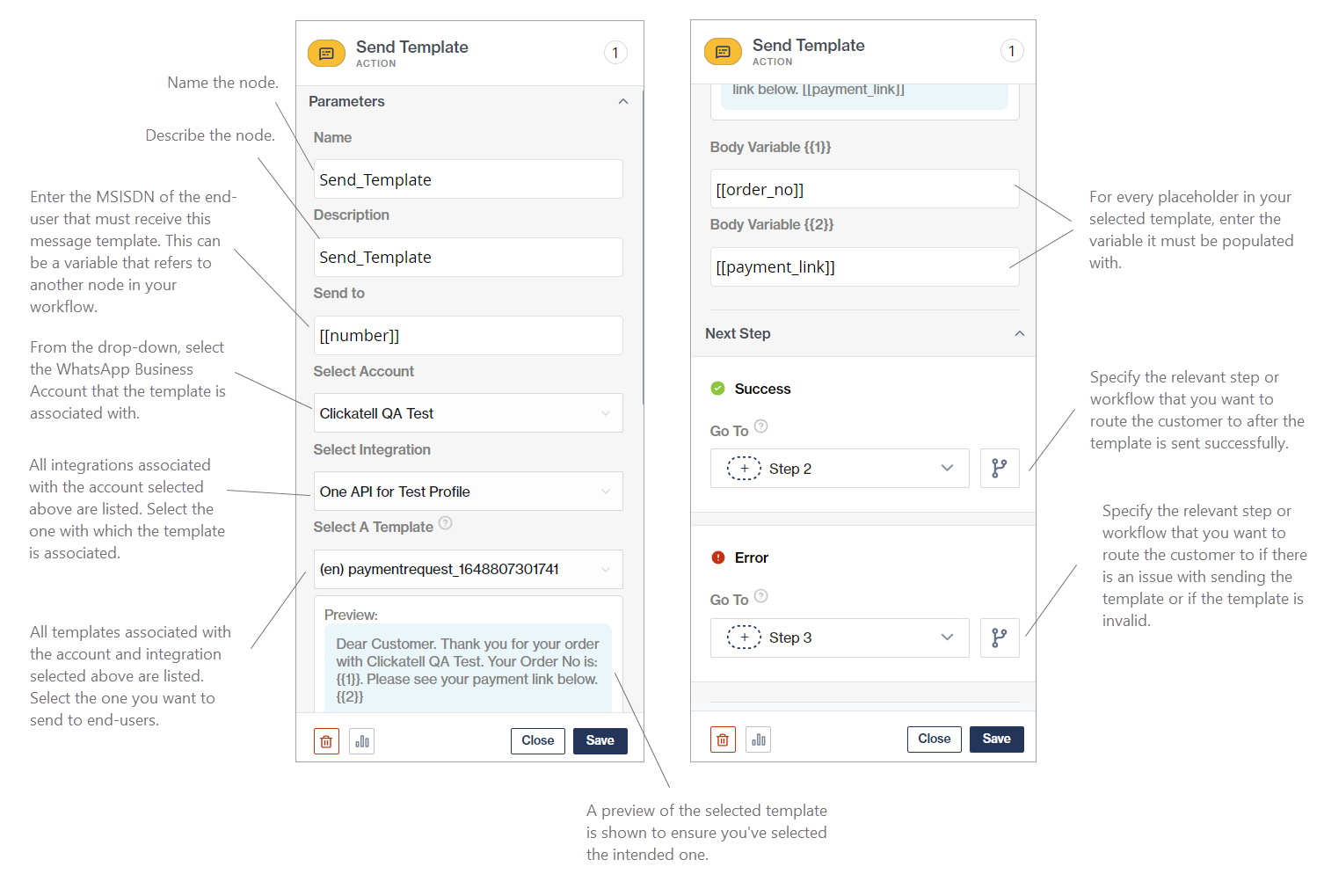
We've released a new workflow node, the [*Send Template*](https://guides.clickatell.com/flow/action-nodes/send-template) node, that makes it easier to send a WhatsApp message template to end-users via Chat Flow. Previously, flow-builders had to configure API calls from Chat Flow to One API to trigger WhatsApp message templates. Now, it's as easy as dragging and dropping this node onto the canvas!
When adding the node to your workflow, Chat Flow does a lookup in the Clickatell Portal account and pulls in all information regarding your WhatsApp Business accounts, API integrations, and approved message templates so it is easy to select the specific template you want to add to the workflow.
The “Select a Template” dropdown displays all approved templates that are available in the selected account and integration. Selecting a template dynamically updates the required fields to match the template type and the number of variables it contains.