> For the complete documentation index, see [llms.txt](https://guides.clickatell.com/release-notes/llms.txt). Markdown versions of documentation pages are available by appending `.md` to page URLs; this page is available as [Markdown](https://guides.clickatell.com/release-notes/release-notes-archive/2023-release-notes/q1-2023/automated-messaging/new-workflow-nodes.md).

# New workflow nodes

{% hint style="info" %}
Available on [**Interact** ](https://www.clickatell.com/products/interact/)and [**Transact** ](https://www.clickatell.com/transact/)packages
{% endhint %}

We've added four new node types for flow-builders to use when building out their workflows:

1. [Dynamic List node](#dynamic-list-node)
2. [Set Variables node](#set-variables-node)
3. [Wait For Callback node](#wait-for-callback-node)
4. [Integration node](#integration-node)

More detail about each new node type is given below.

## Dynamic List node

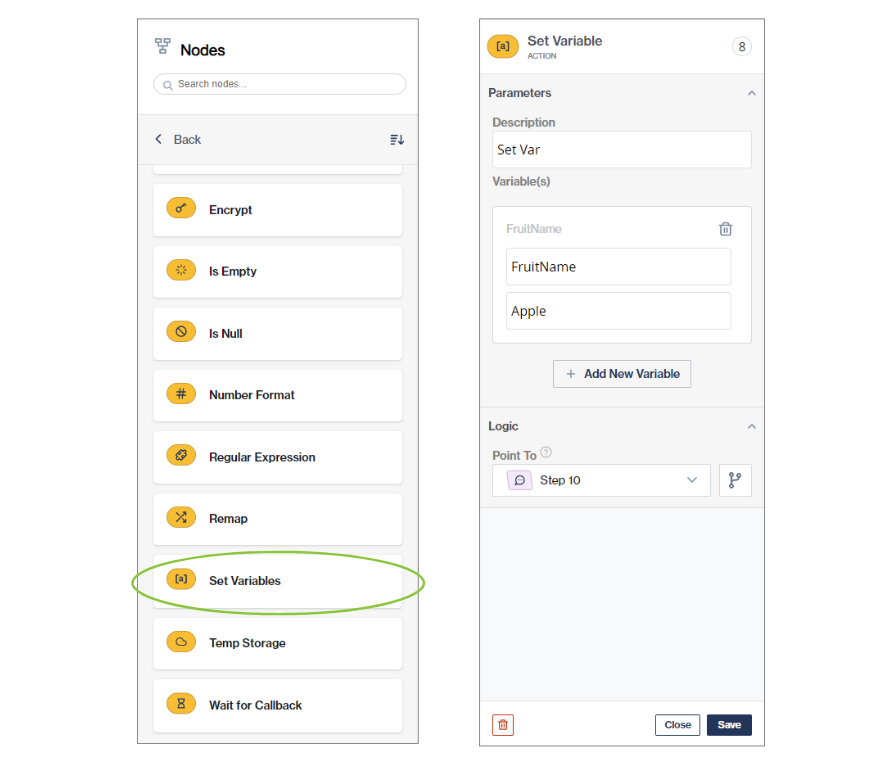
The [Dynamic List node](https://clickatell.gitbook.io/flow/user-facing-nodes/branch-logic-split/menu-nodes-dynamic-list) allows the flow-builder to display a personalized list of options to an end-user.&#x20;

The options shown to end-users in the list are retrieved from the API response.&#x20;

<figure><img src="/files/CnUe194NM2Wk53LoB9gL" alt=""><figcaption><p>Under the User-Facing nodes, drag-and-drop the Dynamic List node onto the canvas and configure its details.</p></figcaption></figure>

## Set Variables node

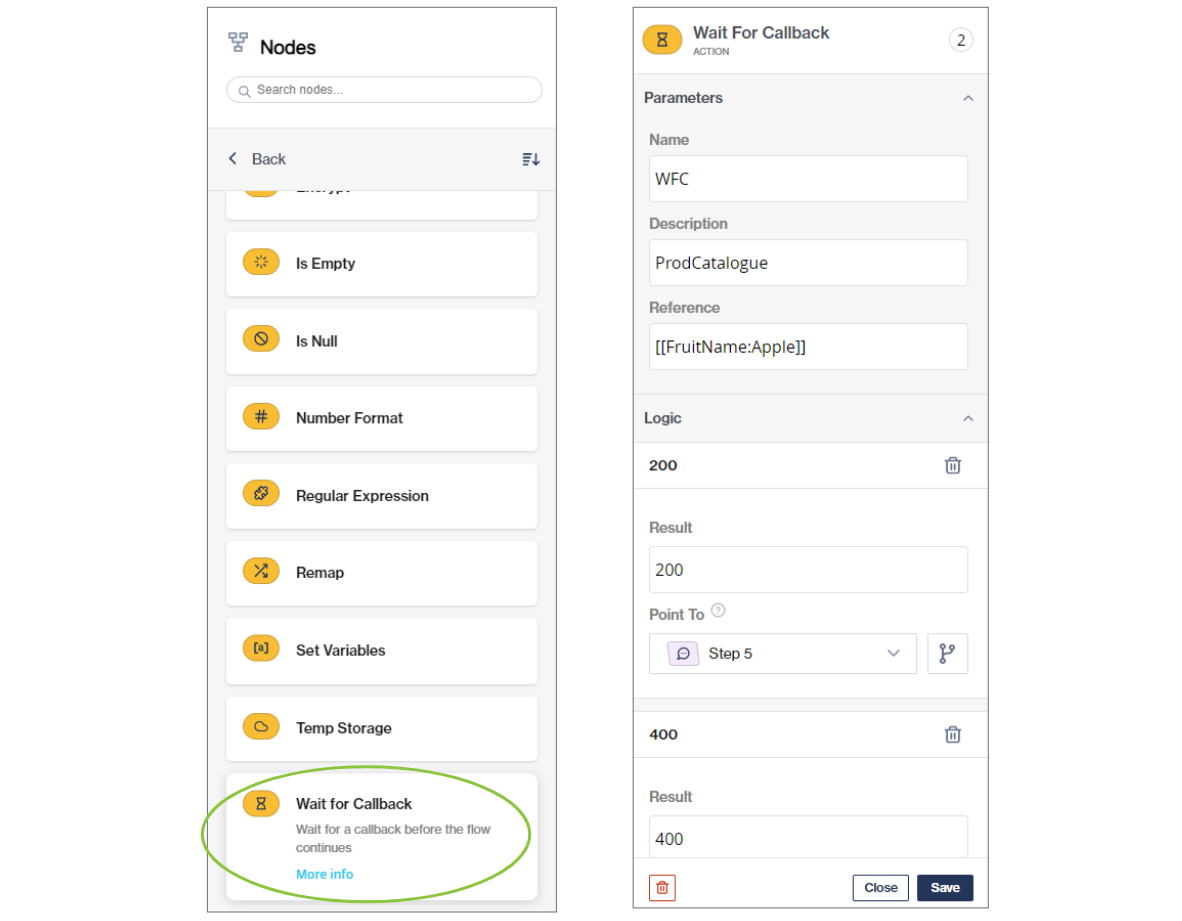
The [Set Variables nod](https://clickatell.gitbook.io/flow/action-nodes/action-nodes-set-variables)e allows the flow-builder to create variables that can be used (and reused) in a given session. You can set multiple variables using the same Set Variables node.

These variables will only be available for the duration of the session.

This is an Action node and is not displayed to the end-user.

<figure><img src="/files/VNZRW1yQxlrQV0FiNLLP" alt="" width="563"><figcaption><p>Under the Action nodes, drag-and-drop the Set Variables node onto the canvas and configure its details.</p></figcaption></figure>

## Wait For Callback node

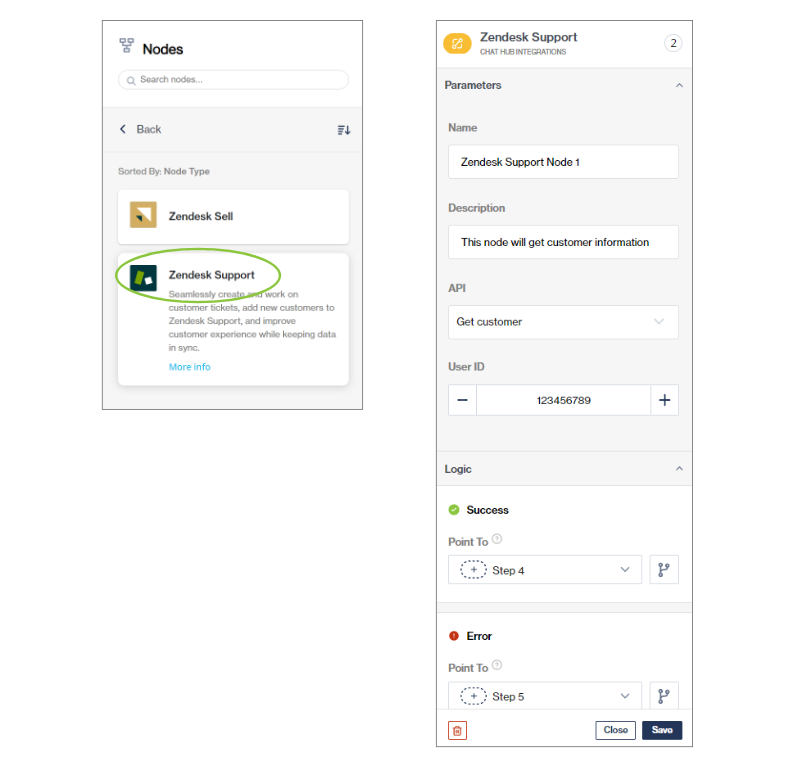
The [Wait For Callback node](https://clickatell.gitbook.io/flow/action-nodes/action-nodes-wait-for-callback) is used to facilitate an asynchronous process external to Chat Flow and continue the flow when a callback is received.

This node will block the flow until a callback is received or the session times out.

This node has to used with the Set Variables node.

<figure><img src="/files/TfzZgcR6xtMEZLvhd72w" alt="" width="563"><figcaption><p>Under the Action nodes, drag-and-drop the Wait For Callback node onto the canvas and configure its details.</p></figcaption></figure>

## Integration node&#x20;

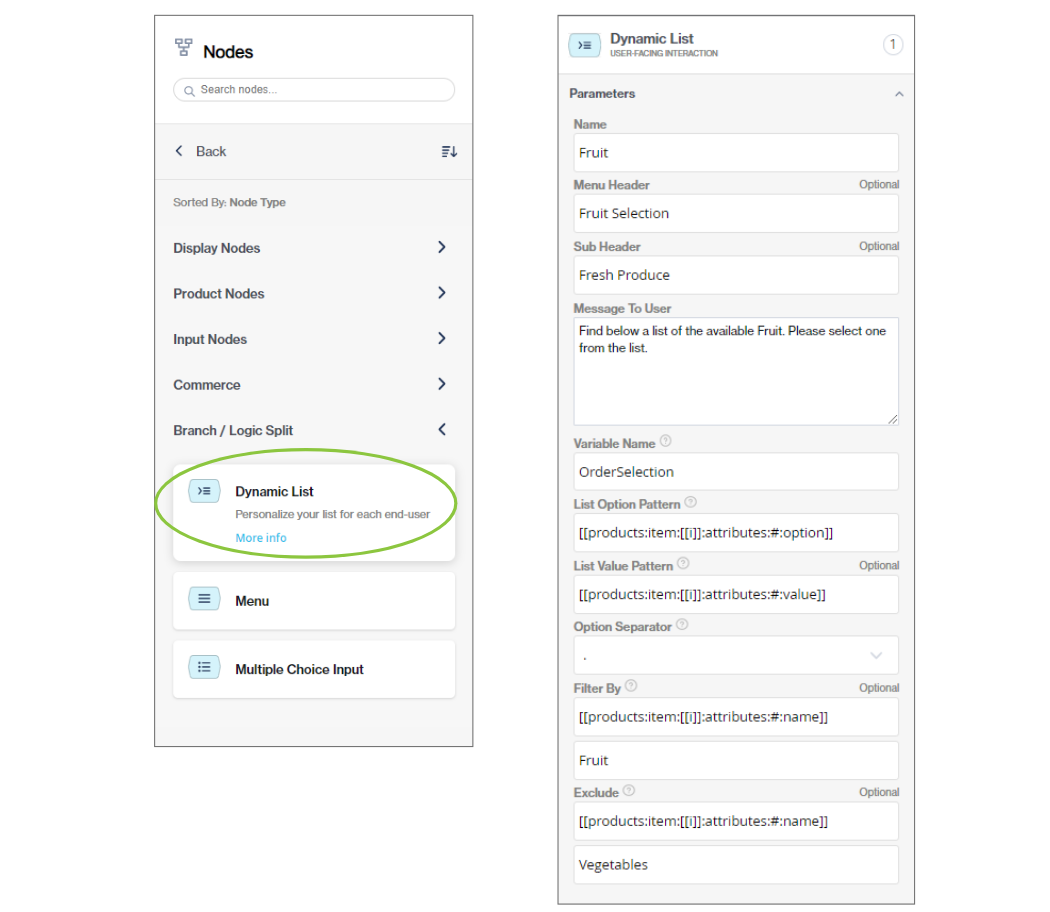
You can integrate your Chat Flow application with the following 3rd-party apps using the [Integration node](https://clickatell.gitbook.io/flow/integrations/integration-nodes):&#x20;

* Salesforce
* Shopify
* Zendesk Support
* Zendesk Sell

Note that these integrations first need to be set up in the Clickatell Portal before they'll be available in Chat Flow.

<figure><img src="/files/5kdBiFOX2btjGQ1flKpc" alt="" width="563"><figcaption><p>Under the Integrations nodes, drag-and-drop the 3rd party application node onto the canvas and configure its details.</p></figcaption></figure>


---

# Agent Instructions
This documentation is published with GitBook. GitBook is the documentation platform designed so that both humans and AI agents can read, navigate, and reason over technical content effectively. Learn more at gitbook.com.

## Querying This Documentation
If you need additional information that is not directly available in this page, you can query the documentation dynamically by asking a question.

Perform an HTTP GET request on the current page URL with the `ask` query parameter, and the optional `goal` query parameter:

```
GET https://guides.clickatell.com/release-notes/release-notes-archive/2023-release-notes/q1-2023/automated-messaging/new-workflow-nodes.md?ask=<question>&goal=<endgoal>
```

`ask` is the immediate question: it should be specific, self-contained, and written in natural language.
`goal` is optional and describes the broader end goal you are ultimately trying to accomplish on behalf of the user. GitBook uses it to tailor the answer towards what is most useful for that goal.

The response will contain a direct answer to the question and relevant excerpts and sources from the documentation.

Use this mechanism when the answer is not explicitly present in the current page, you need clarification or additional context, or you want to retrieve related documentation sections.