> For the complete documentation index, see [llms.txt](https://guides.clickatell.com/clickatell-ai-user-guide/llms.txt). Markdown versions of documentation pages are available by appending `.md` to page URLs; this page is available as [Markdown](https://guides.clickatell.com/clickatell-ai-user-guide/assistants/set-up-your-assistants.md).
# Set up your assistants
## Add assistants
To add a new assistant, follow the below steps. You can add as many assistants as you need.
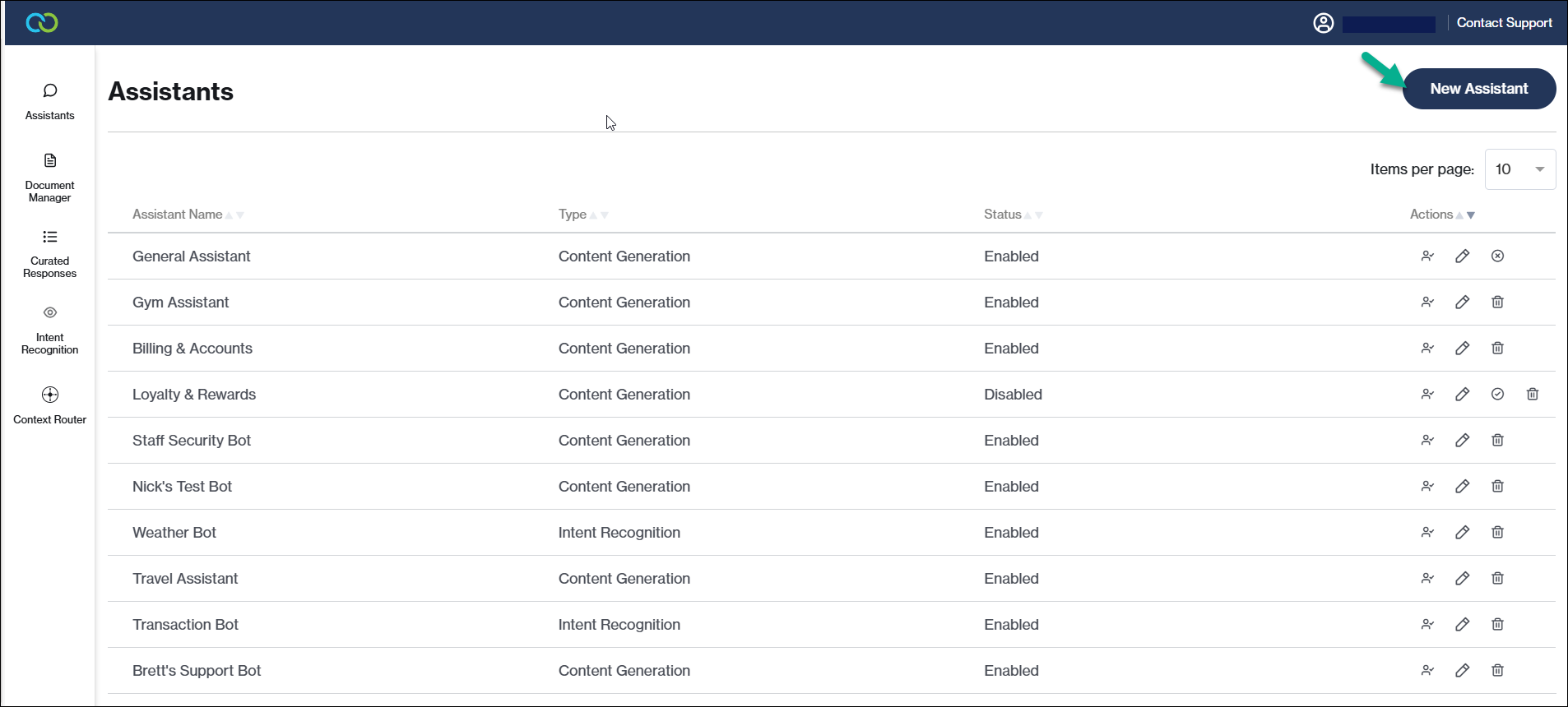
1. In the *Assistants* tab, click *New Assistant*.
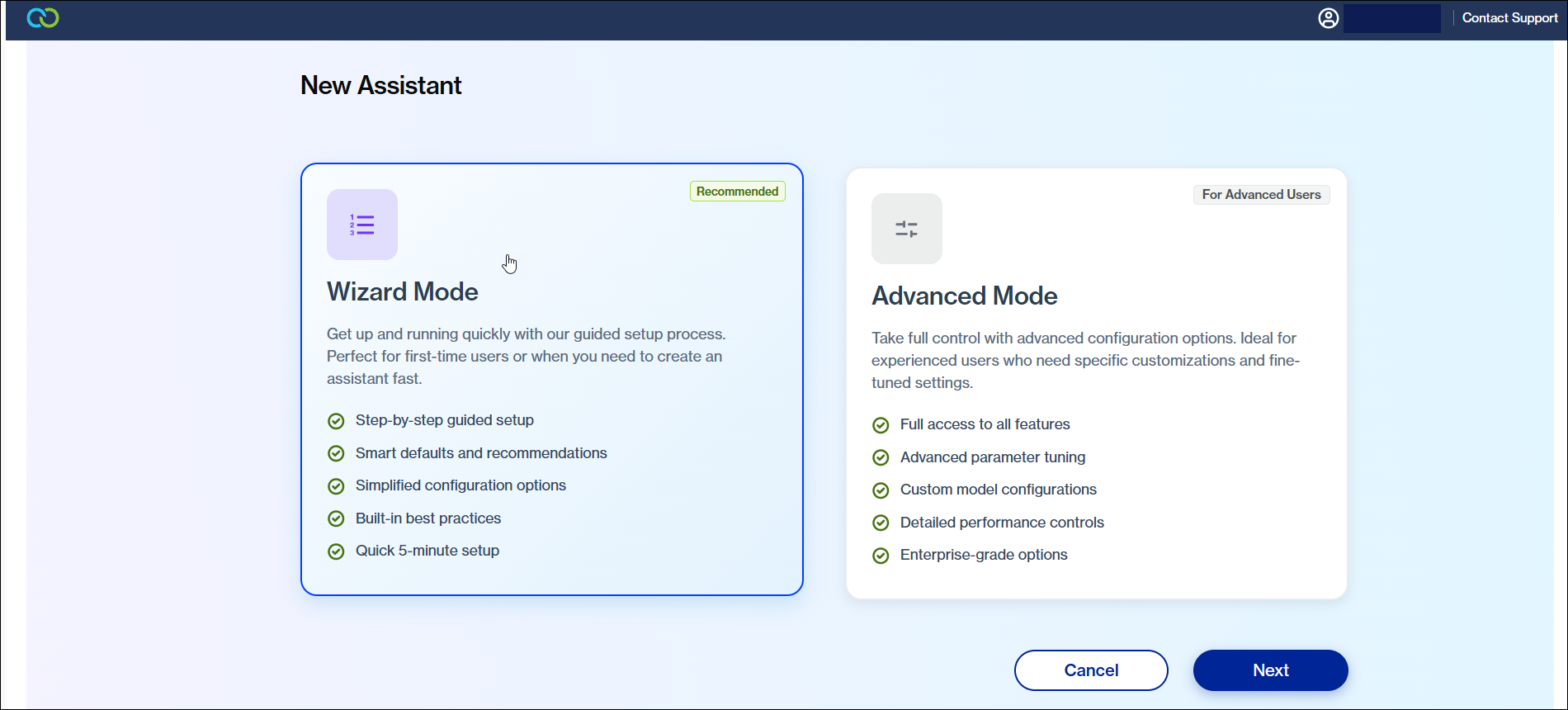
2. For the quickest set up, select *Wizard Mode*. It provides a guided setup, automatically configuring an assistant with best practice defaults. The *Advanced Mode,* however, allows for more customization.
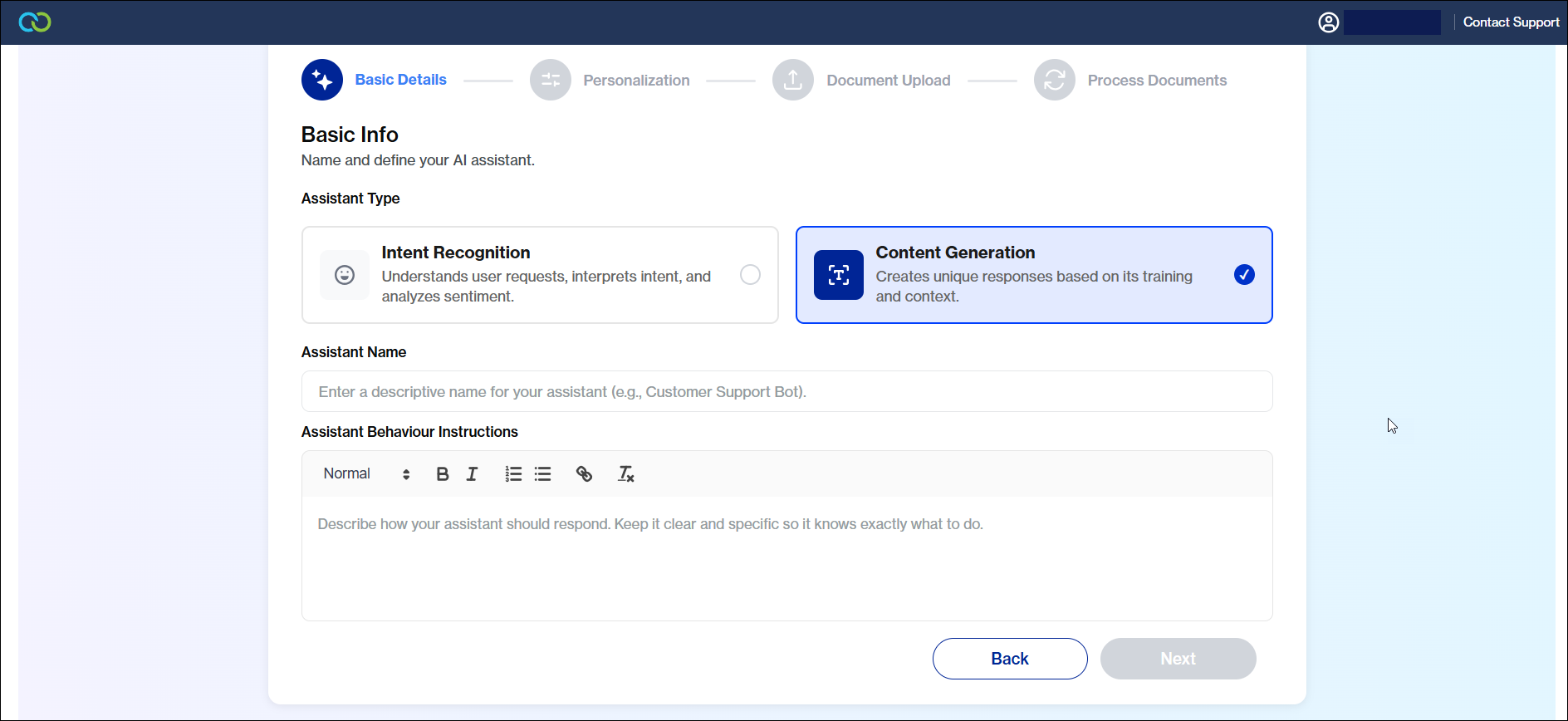
3. Select the assistant type, and give your assistant a name. Provide it with clear behavior instructions.
* If you select the *Intent Recognition* assistant type, you must also select the [intent set](/clickatell-ai-user-guide/training/configure-intents.md) you want to link to it.
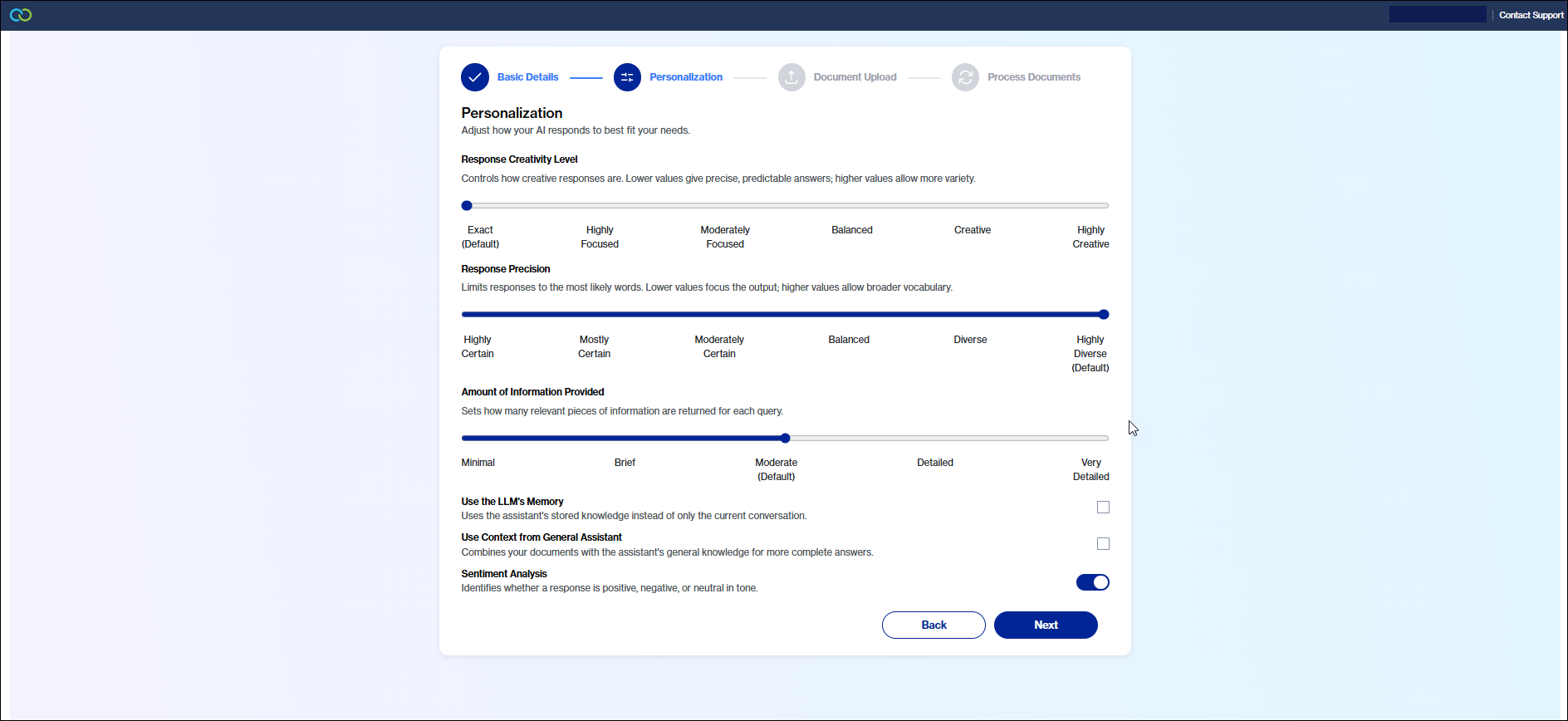
4. Personalize your assistant.
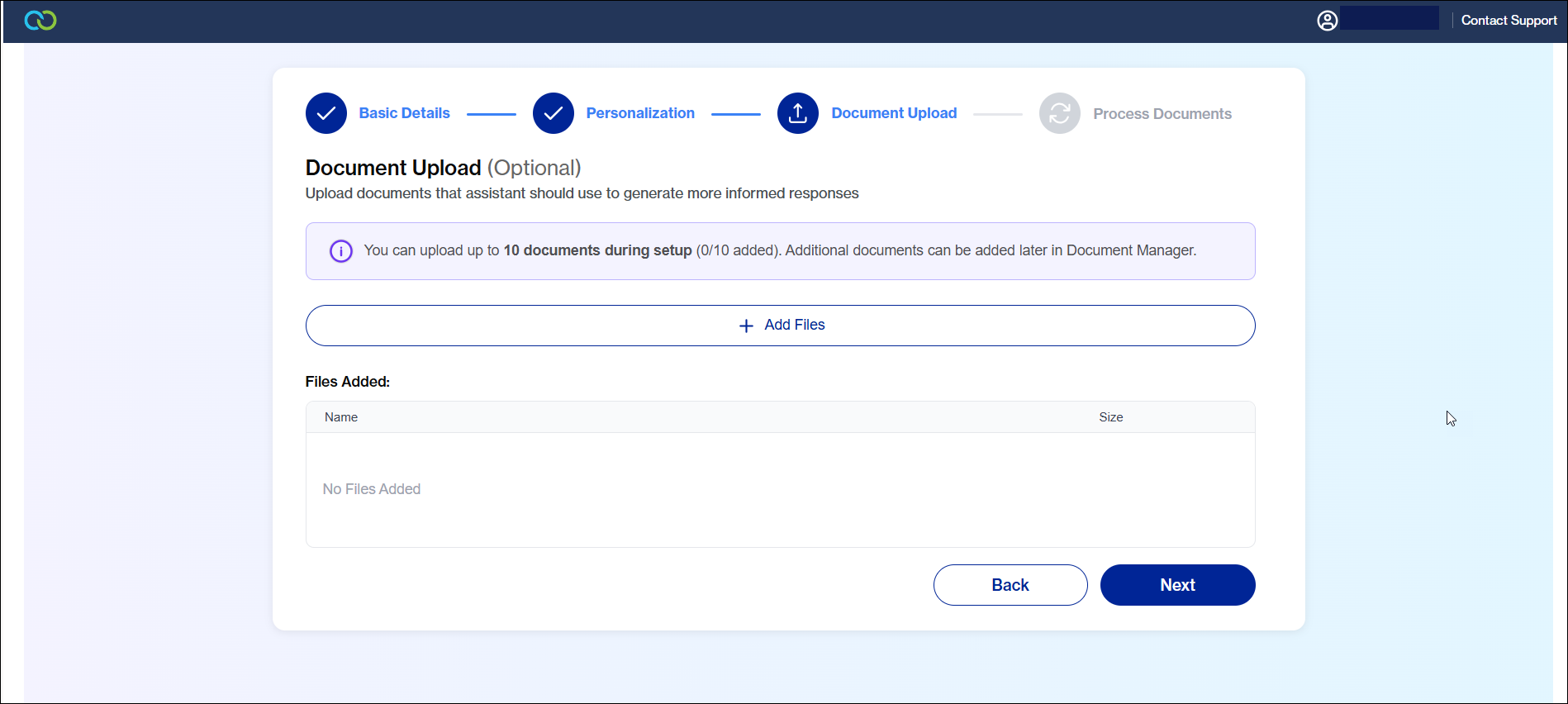
5. Upload documents to train your assistant.
6. You can now either *Test* or *Save* your assistant's settings.
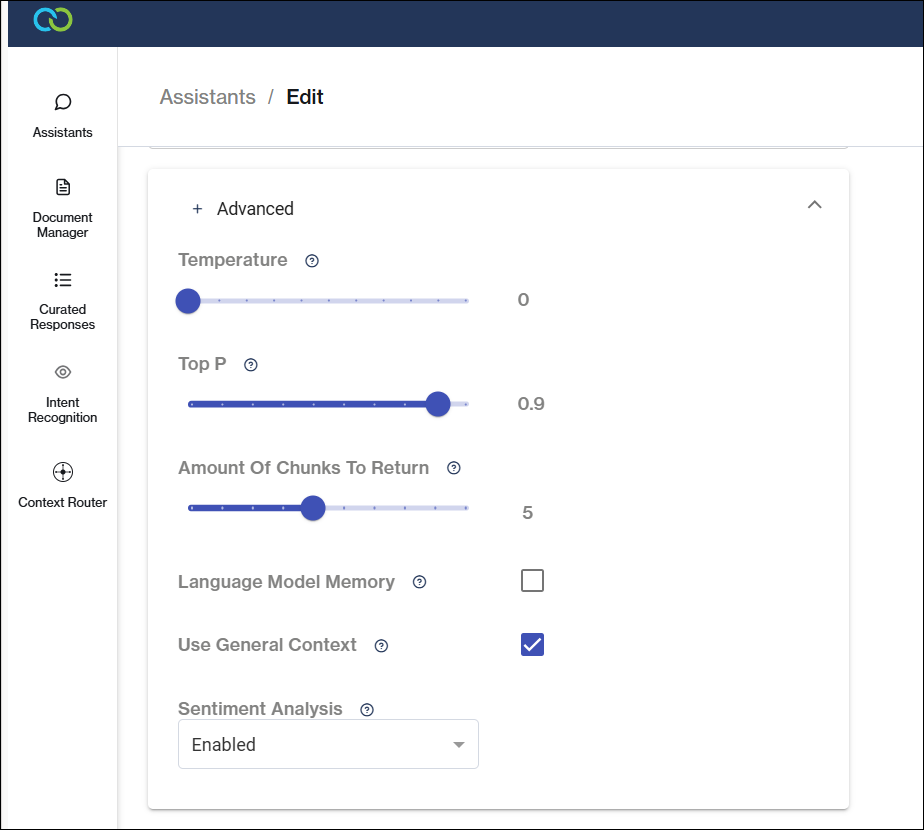
Optionally, you can configure advanced settings for your assistant:
* **Temperature:** Controls how "random" or "creative" the generated responses are. A lower value makes the response more focused and predictable. Adjusting the temperature allows users to balance between creativity and coherence, depending on the desired outcome of the text generation.
* **Top P:** A technique that helps generate text that is coherent and diverse, providing a middle ground between deterministic and purely random sampling methods. Lower values (e.g., 0.1) make responses more focused and deterministic. Higher values (e.g., 0.9) allow more creativity and variation. Unlike temperature, Top P adapts to the confidence of the model at each token and filters the output distribution to consider only the most probable tokens (words or subwords).
* **Amount of chunks to return:** Controls how many pieces of relevant information are retrieved in response to your search query. Chunking is essential for handling long documents or conversations, ensuring that the model can process extensive data by breaking it into manageable parts.
* **Language model memory:** If enabled, the assistant will respond using internal memory and not the context provided.
* **Use general context:** If enabled, the assistant will use both its documents and the information available in the general assistant's documents.
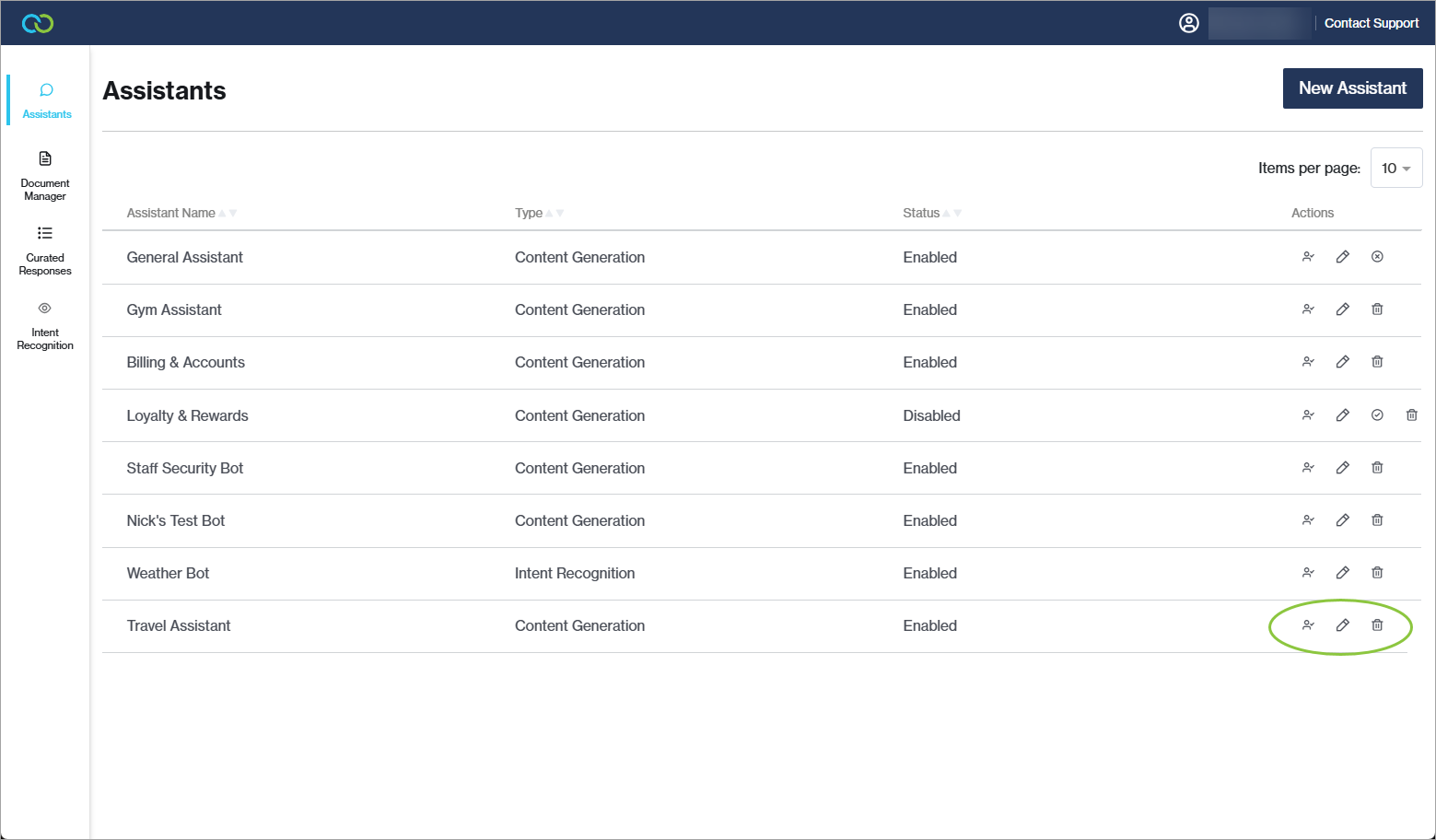
The newly created assistant now appears in the *Assistants* tab and is **enabled** by default.
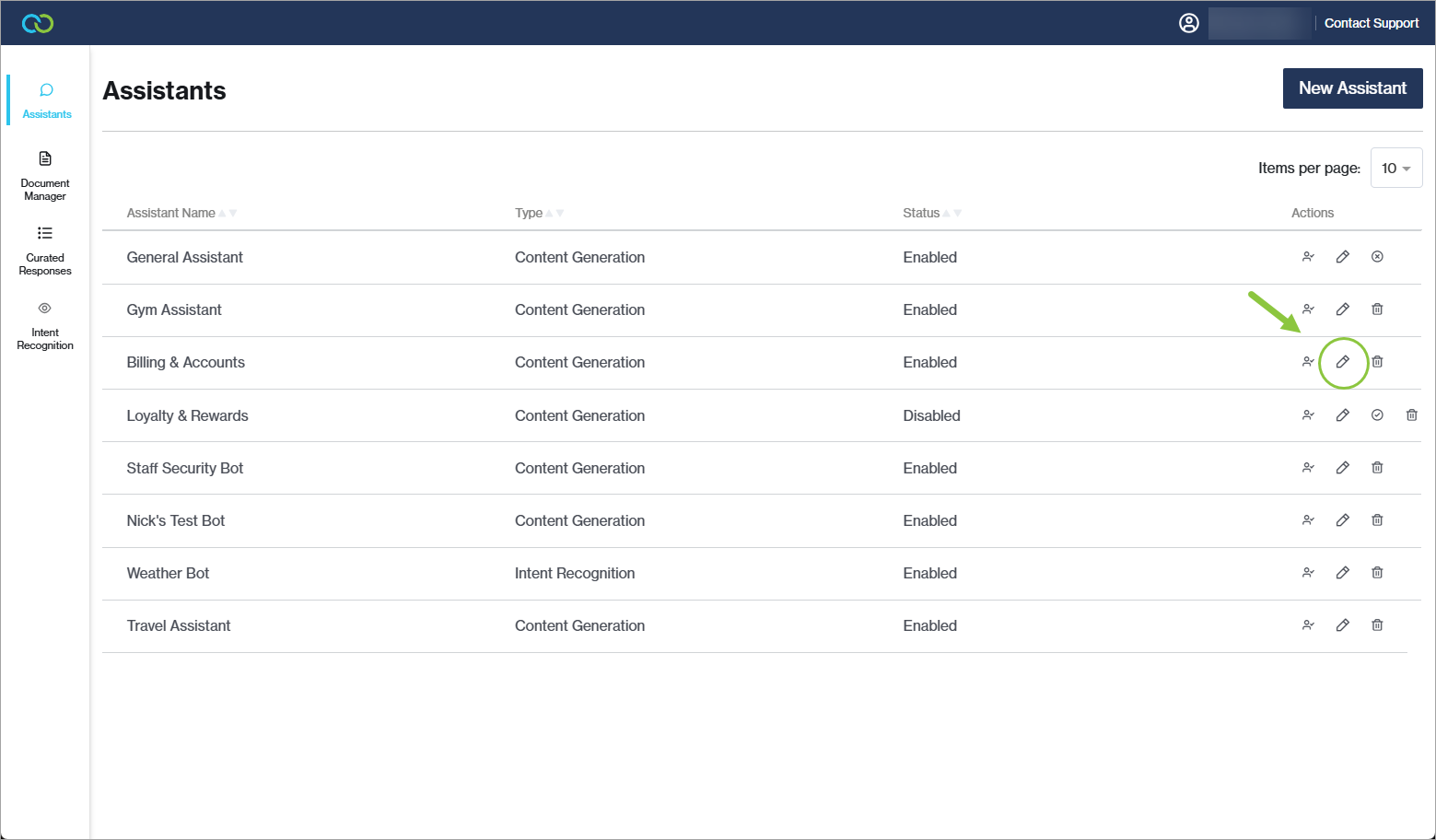
* From here you can test, [edit](#edit-or-enable-disable-assistants), [disable](#edit-or-enable-disable-assistants), or delete it.
## Edit or enable/disable assistants
{% hint style="info" %}
The [General Assistant](/clickatell-ai-user-guide/assistants/overview.md#assistant-types) is added by default. You cannot disable or delete it, but you can edit certain elements.
{% endhint %}
1. On the *Assistants* tab, select the *Edit* icon (pencil).
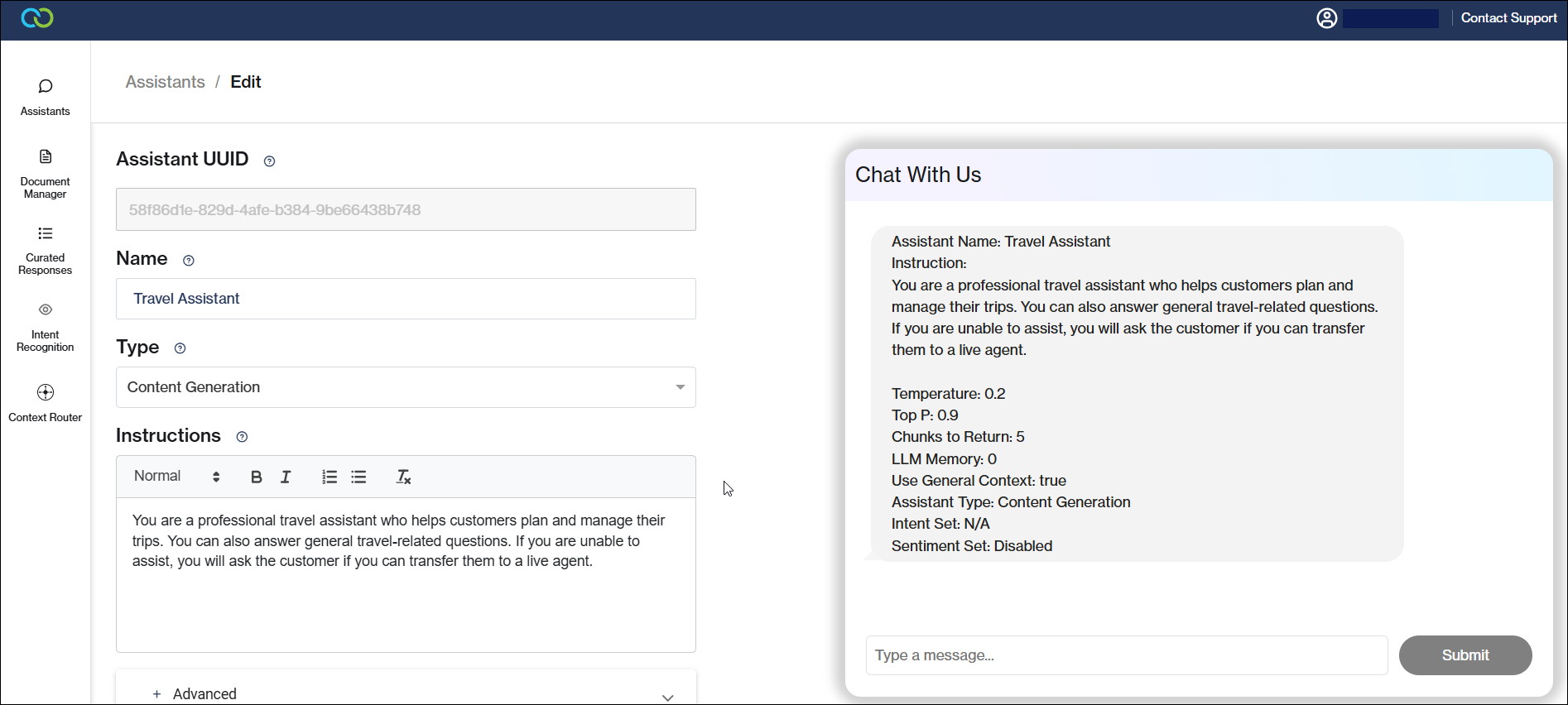
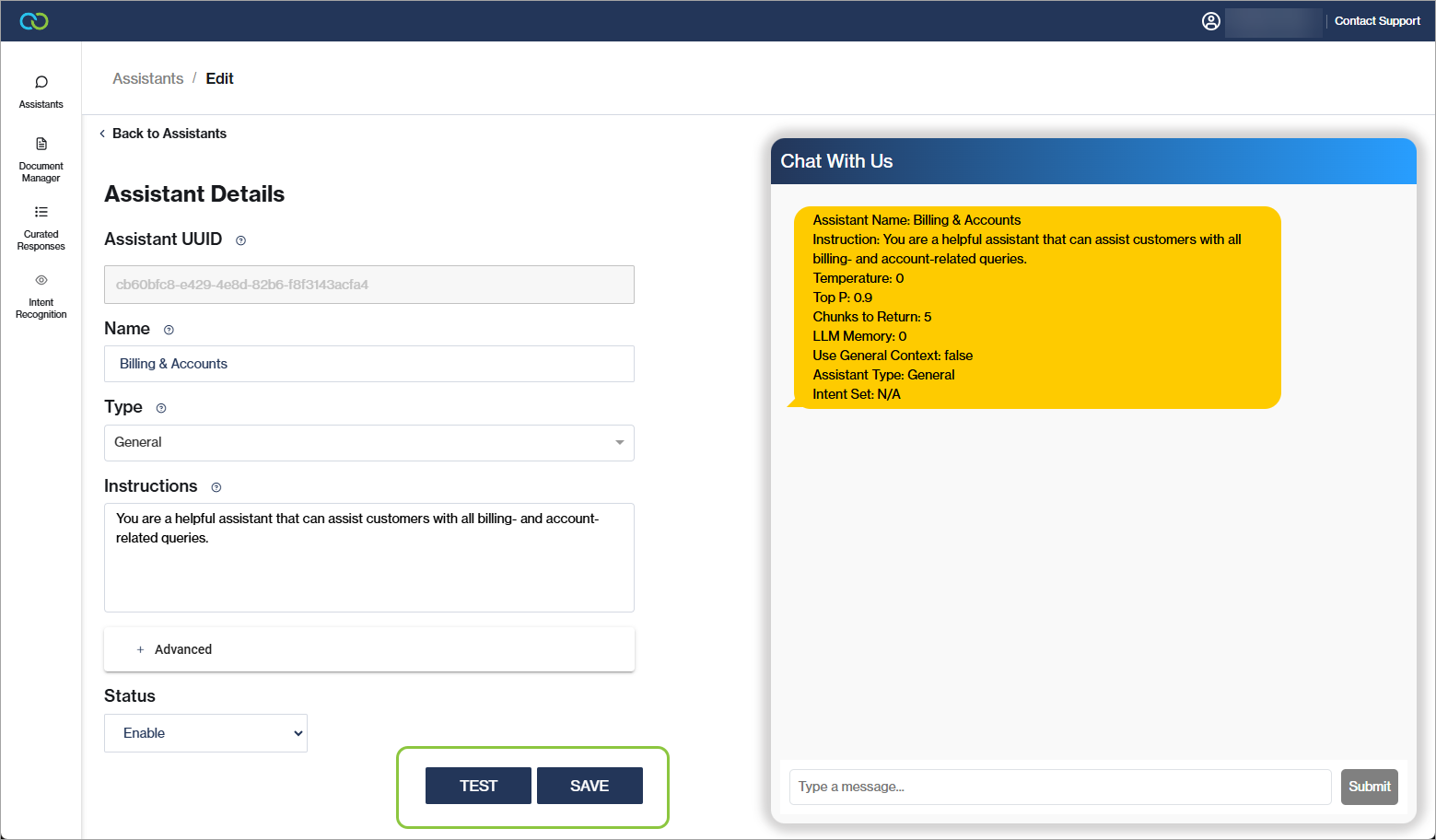
2. From here you can edit the Name, Type, Instructions, and Advanced Settings for the assistant.
3. You can also change the status of the assistant (Enabled/Disabled).
4. Before saving your changes, click the *Test* button to apply the changes and try it out using the chat widget on the right.
5. Once you are happy with the changes, click *Save* to update the assistant accordingly.